A quality scan tool is the backbone of modern diagnostics — but it won’t solve every problem. When faults are intermittent, electrical, or signal-related, workshops often hit a point where a scan tool can tell you what the system thinks is happening, but not why it’s happening.
That’s where an oscilloscope becomes valuable. This post explains when a scope is useful in real workshop work, what it helps you confirm faster, and how to decide whether it fits your workshop.
For a broader overview of categories, start here: workshop equipment guide →
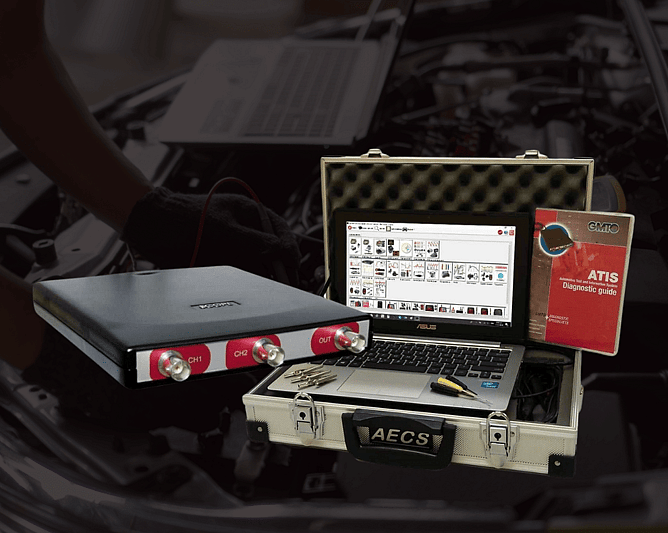
Scan tool vs oscilloscope (the simple difference)
A scan tool is great for:
Fault codes, live data, service functions
Module communication and system status
Guiding you toward likely causes
An oscilloscope is great for:
Seeing electrical signals in real time
Confirming whether a sensor/actuator signal is healthy
Diagnosing wiring, voltage drops, noise, and intermittent faults
In plain terms: a scan tool helps you identify the likely issue, a scope helps you prove the signal.
Explore the category hub here: diagnostic equipment →
When a scan tool isn’t enough (common workshop scenarios)
If any of these sound familiar, scope capability can save serious time:
1) Intermittent faults
The vehicle only plays up “sometimes”. A scan tool may not capture the moment the signal drops out — a scope can.
2) Sensor signal issues
You can see a sensor reading looks wrong, but you need to confirm:
Is the sensor itself failing?
Is the wiring/connector causing dropouts?
Is there electrical noise or distortion?
3) Actuator control problems
When a component is commanded but doesn’t behave as expected, a scope can help confirm whether the control signal is present and correct.
4) Wiring and voltage drop problems
Wiring faults can waste hours. A scope helps validate signal integrity and reveal issues that don’t show up as a clean fault code.
What to consider before adding a scope
An oscilloscope isn’t just a “buy it and it solves everything” tool — the value comes from correct use and a repeatable process.
1) Your workshop’s diagnostic workload
A scope is most valuable when you regularly see:
Drivability issues that aren’t straightforward
Intermittent faults
Electrical and sensor-related problems
Late-model vehicles with more complex systems
2) Training and repeatable workflow
The best workshops treat scope work like any other process:
A simple checklist
Consistent test points
Staff who know when to use it (and when not to)
3) Integration with your scan tool workflow
The scope shouldn’t be a separate “special tool nobody touches”. It should be a natural next step:
Scan tool points you to the system → scope confirms the signal → you repair with confidence.
A simple decision guide: do you need scope capability?
You’re a good candidate if:
you’re losing time on intermittent or electrical faults
you’re replacing parts “to see if it fixes it”
comebacks are happening because the root cause wasn’t proven
you want deeper diagnostic capability as vehicle tech evolves
If your workshop work is mostly routine servicing with minimal diagnostics, a scope might be a later upgrade, but it’s a strong capability to build into a diagnostics-focused workshop.
Quick checklist before you invest
What types of faults are costing us the most time right now?
How often do we hit “scan tool says X, but we can’t prove it”?
Who in the team will own scope usage and training?
What does onboarding/support look like after purchase?
How will we standardise basic tests so results are repeatable?
If you can’t confidently answer these yet, it’s worth mapping where a scope fits into your diagnostic workflow before purchasing.
For broader diagnostic category navigation, visit: diagnostic equipment →
And for category context: workshop equipment guide →
Not sure what’s best for your workshop?
Tell us your vehicle mix and the diagnostic work you do most, and we’ll recommend a practical diagnostic setup (including scope capability) that fits your workflow and budget.