Not a typically enjoyable technical article but I reckon it's pretty important.
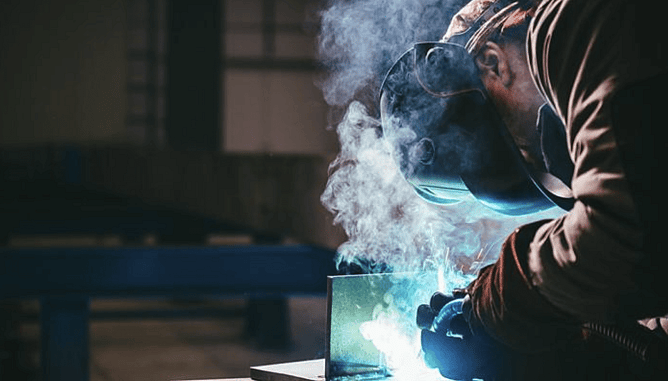
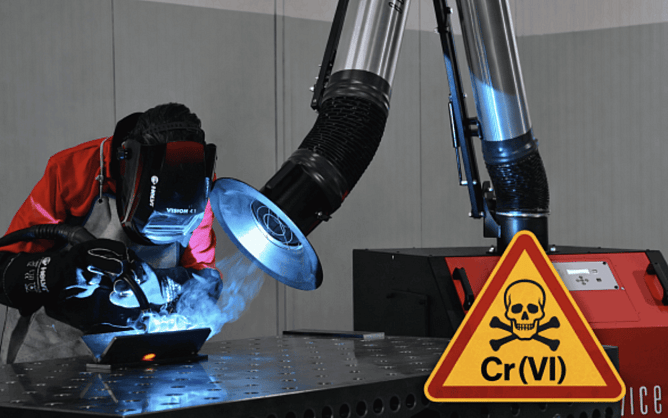
Particulate matter is important for anyone working an automotive workshop, fleet maintenance facility, or industrial operation. The particles in exhaust gasses, welding fumes, from metalworking, laser and plasma cutting and oil mist from machining provide the highest areas of exposure to our skilled and valued staff.
This matters because these particles are classified by the World Health Organization as a Group 1 confirmed human carcinogen.
This really matters because the particles are invisible and while the regulations in Europe acknowledge these particles are present and its becoming a legal requirement for vehicles to pass particulate matter tests, we are still using a visual test for exhaust gas emissions in New Zealand and extraction is not compulsory.
Engine exhaust emissions in the workshop is a well known issue, but it is just as important to consider for a wider scope of industry also generating harmful particulate matter.
Understanding Particulate Matter
Particulate matter (PM) is made up of a complex mixture of solid and liquid particles and is classified by diameter.
The measurement scale is the micrometer, commonly called the micron, and 1 micron is one millionth of a meter.
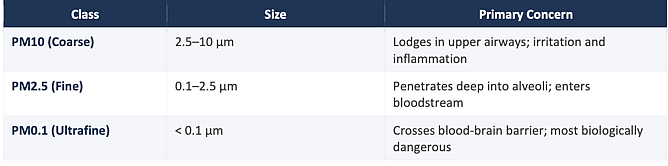
For context: a human hair is approximately 70 µm wide. PM2.5 particles are 28 times smaller than a human hair. Your eyes and nose cannot detect them. Your lungs and bloodstream can.
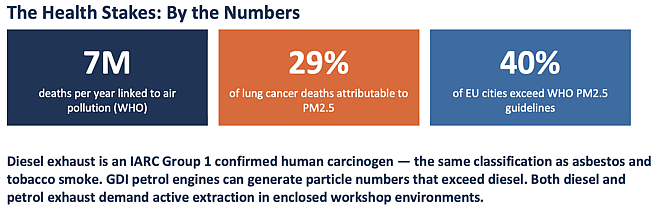
The health consequences extend beyond the lungs:
Respiratory: PM2.5 lodges in alveoli causing inflammation, asthma, COPD, and reduced lung capacity. PM0.1 is absorbed directly into the bloodstream.
Cardiovascular: Systemic inflammation raises risk of myocardial infarction, stroke, arrhythmia, and arteriosclerosis.
Neurological: Ultra fine particles translocate via the olfactory nerve and are associated with dementia, Parkinson's disease, and childhood cognitive impairment.
Carcinogenic: Diesel exhaust PM is a confirmed human carcinogen. Polycyclic aromatic hydrocarbons (PAHs) present in all exhaust are potent mutagens
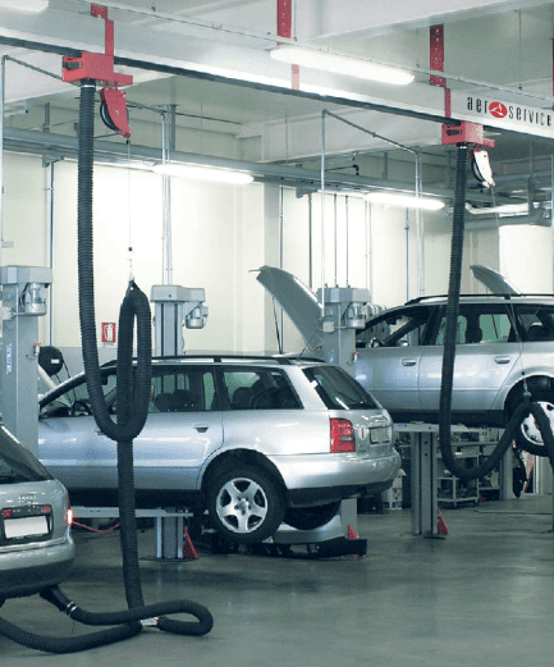
The Workplace Reality: Automotive & Industrial Settings
Automotive workshops and industrial facilities are among the highest risk PM exposure environments
Consider the sources your team faces daily:
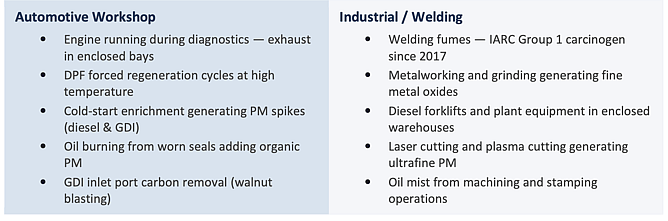
An unfiltered diesel engine produces 10–100 mg/km of particulate matter. Euro 6 sets a limit of 4.5 mg/km for road use but there is no exhaust limit regulation governing the air inside your workshop. That protection is your responsibility.
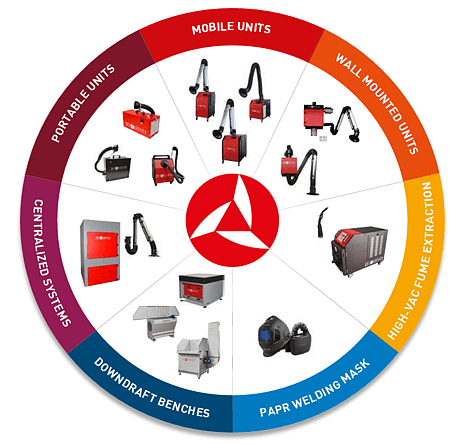
The Solution: Aerservice Extraction Systems
We are the authorised New Zealand distributor for Aerservice Equipments Srl, an Italian manufacturer founded in 1982 and now specialising exclusively in welding fume, dust, and gas extraction.
We can supply a wide range of automotive and industrial extraction solutions including site assessments, product recommendation, installation and after sales support.