Vehicle fumes should not be treated as “just part of the job”
Running vehicles indoors is a normal part of workshop life. Technicians need to start engines for diagnostics, servicing, testing, tuning, inspections, and training.
But while running vehicles inside may be unavoidable, letting exhaust fumes build up in the workshop should not be treated as normal.
A dedicated vehicle exhaust extraction system helps capture fumes closer to the source and direct them away from the working area. For automotive workshops, this can support a cleaner, safer, and more comfortable environment for technicians and customers.
What is vehicle exhaust extraction?
Vehicle exhaust extraction is equipment designed to remove exhaust fumes from the workshop while a vehicle is running indoors.
Most systems include:
An exhaust hose
A nozzle or attachment for the vehicle exhaust
A fan or extraction unit
A ducting, wall-mounted, mobile, retractable, or rail-based setup
The aim is simple: capture fumes as close to the vehicle as possible, before they spread through the workshop.
Why exhaust extraction matters in modern workshops
Modern workshops are doing far more than basic servicing. Many are completing diagnostics, calibrations, emissions checks, training, electrical fault-finding, and performance testing.
These jobs often require vehicles to be running indoors for longer periods, which makes extraction especially useful in:
Diagnostic bays
Service bays
Diesel workshops
Training institutes
Fleet workshops
Dyno and performance workshops
Emissions testing areas
Heavy vehicle workshops
It helps improve air quality in the workshop
When vehicles are running indoors, fumes can quickly spread across the workspace. A workshop extraction system helps reduce how much exhaust remains in the working area.
This is not only about technician comfort. Cleaner air can also help create a more professional environment for staff, visitors, apprentices, and customers.
It supports a safer working environment
Workshop safety is not limited to hoists, electrical equipment, PPE, and manual handling. Air quality is also part of the working environment.
Exhaust extraction can be one part of a broader workshop safety setup, especially where vehicles are regularly run indoors.
It improves technician comfort
Even when a vehicle is only running for a short time, fumes can be unpleasant and distracting.
A properly selected extraction system can help make the bay more comfortable to work in, especially during:
Diagnostics
Idle testing
Engine running checks
Tuning
Emissions testing
Training sessions
Fault-finding work
It helps keep the workshop more organised
Good extraction is not just about removing fumes. The right system can also improve how the workshop functions.
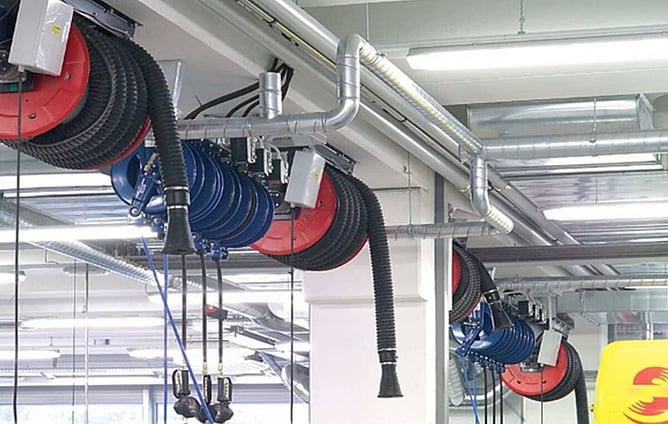
Retractable hose systems, wall-mounted units, and rail-mounted systems can help keep hoses organised and reduce clutter across the floor.
This can be especially useful in busy service bays where technicians need to move around vehicles, tools, hoists, and other workshop equipment.
Types of workshop extraction systems
Mobile exhaust extraction units
Mobile extraction units are designed to be moved to the vehicle when required. They are a flexible option for workshops that do not need a fixed system in every bay.
They are useful for:
Smaller workshops
Occasional extraction use
Shared workspaces
Training environments
Bays where vehicle positions change often
Wall-mounted extraction systems
Wall-mounted systems are suited to fixed bays where vehicles are often run in the same position.
They are useful for:
Diagnostic bays
Service bays
Preparation areas
Dual workstation setups
Workshops with limited floor space
Retractable extraction systems
Retractable systems are useful when workshops want extraction available at the bay without leaving hoses across the floor.
They are useful for:
Higher-use service bays
Professional workshop layouts
Cleaner hose storage
Multi-bay workshops
Workshops that want a more organised setup
Rail and centralised extraction systems
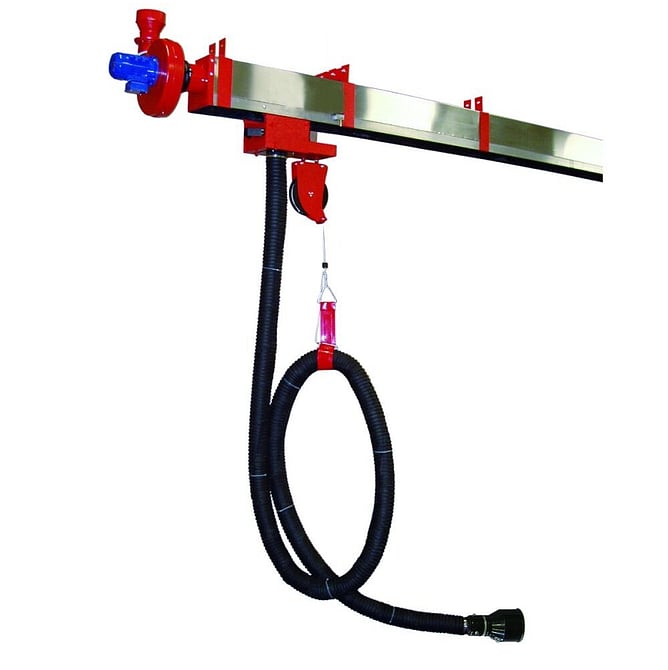
Larger workshops may need a more tailored extraction solution, such as a rail system or centralised extraction setup.
These are often better suited to:
Multi-bay workshops
Fleet workshops
Heavy vehicle workshops
Inspection centres
Larger diagnostic or service environments
How to choose the right workshop extraction setup
Consider how often vehicles are run indoors
If vehicles are only run indoors occasionally, a mobile unit may be enough. If vehicles are regularly run in a dedicated bay, a fixed or retractable system may be more practical.
Consider the number of bays
A single-bay workshop may only need a simple setup. A larger workshop may benefit from dual extraction, retractable systems, or a rail-based solution.
Consider the type of vehicles you work on
Passenger vehicles, diesel vehicles, trucks, agricultural machinery, and performance vehicles can all have different extraction requirements.
The right system may depend on hose size, hose length, nozzle type, fan power, and heat resistance.
Consider the workshop layout
Wall space, ceiling height, vehicle movement, bay width, and hose reach all affect which extraction setup will work best.
Before buying, it is worth thinking through how technicians actually move around the workshop and where vehicles are most often run.
Workshop extraction is part of a better-equipped workshop
A good workshop extraction setup supports the way modern automotive workshops operate.
It can help improve:
Air quality
Technician comfort
Workshop organisation
Safety processes
Vehicle testing workflows
Professional presentation
For workshops running vehicles indoors regularly, extraction should not be an afterthought. It should be considered part of the workshop equipment setup.
Talk to AECS about workshop extraction
AECS supplies Aerservice workshop extraction equipment for New Zealand automotive workshops, training institutes, performance workshops, service bays, and fleet facilities.
Whether you need a mobile extraction unit, wall-mounted system, retractable extraction unit, or a more tailored workshop extraction setup, AECS can help you choose a practical solution for your space.
Talk to AECS about your workshop layout, vehicle types, and how you plan to use the system.