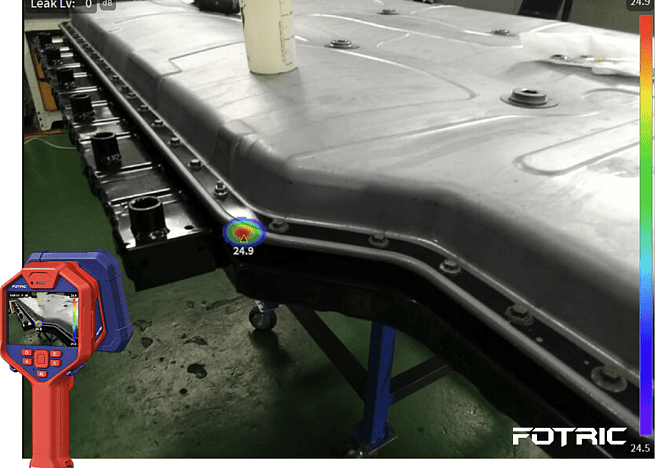
An EV battery pack is a big sealed box with a lot of joints. Knowing it leaks and knowing where it leaks are two different jobs, and the second one is where the hours go.
EV and hybrid battery packs live under the floor, and New Zealand roads throw everything at them: gravel, mud, road spray, the odd ford, and a weekly blast through the wash bay. The only thing standing between all of that and the cells is the enclosure seal.
FOTRIC put out a piece this week on why leak testing matters so much for battery packs, and it’s worth passing on, because it applies to anyone who opens one up.
WHY IT MATTERS
When a pack seal lets go, water, dust and moisture can find a way in. Over time that means corrosion, insulation breaking down, shorter battery life and a genuine safety risk.
None of it shows up on day one. It shows up months later as an isolation fault, a warning light, or a customer asking why their car is back on your hoist. Resealing a pack isn’t finished when the lid goes back on. It’s finished when you’ve proven it’s tight.
THE PROBLEM
A tightness test gives you pass or fail. It doesn’t tell you where. And a battery pack is a large assembly with a lot of sealing faces: the lid gasket, every connector and coolant penetration, and every fastener in between.
The old answer is soapy water and patience. On a battery pack that’s a slow, messy process and you’re spraying liquid on the one component you’re trying to keep dry.
THE EQUIPMENT
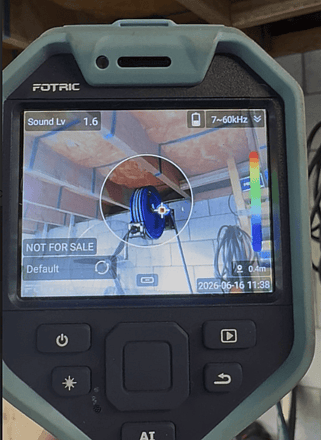
Acoustic imaging. Air escaping from a pressurised enclosure makes a noise, and most of it is ultrasonic, well above the 20 Hz to 20 kHz your ears can pick up. An acoustic camera uses an array of microphones to capture that sound and lays it over a live camera image. The leak shows up as a coloured spot on the screen. You don’t touch the pack, you don’t wet it, and you’re looking at the answer in seconds instead of hunting for it.
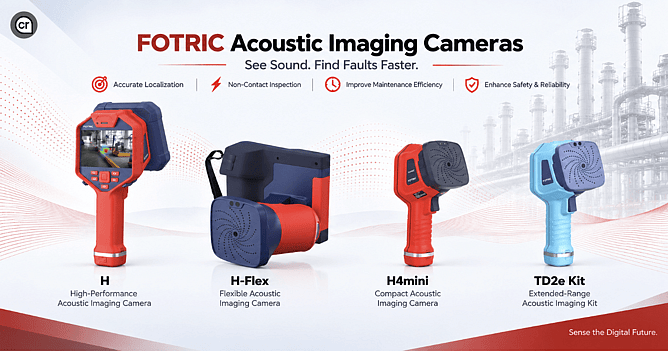
For automotive work, the one we recommend is the FOTRIC TD2e Kit. FOTRIC built it for automotive workshops, EV battery pack enclosures are on its job sheet, and it found the leak in the pack test below. It has 64 digital microphones, listens from 2 to 100 kHz and works from 0.3 to 60 metres. It’s IP54 rated, survives a 2 metre drop, and the kit comes ready to work with two batteries, a charging dock and a hard case.
WORKED EXAMPLE
FOTRIC reports a field application where their H6 was used on an EV battery pack during a tightness test. That test ran at 0.133 bar, on a job that would normally run at around 1 bar, so it was a much quieter leak to find. The H6 pinpointed it, and the TD2e found it too.
0.133 bar. The H6 and the TD2e both found the leak.
GET THE TEST PRESSURE RIGHT
A word of warning before anyone reaches for the air line. FOTRIC’s article is written for battery manufacturers, and those are production numbers. An assembled pack in a workshop is tested at a tiny fraction of that.
Tesla’s Model S procedure is a good example. It sets the regulator to 0.19 psi, about 13 millibar, and warns that injecting more than 0.2 psi will damage the HV battery. FOTRIC’s 0.133 bar is nearly ten times that, and one bar is more than seventy times it. So it’s the manufacturer’s procedure, the manufacturer’s pressure and a properly regulated test kit, every time.
Look at what Tesla has you do when the pack fails: listen for hissing, then work round every seal and fastener with liquid leak detector. That’s exactly the step an acoustic camera speeds up. FOTRIC doesn’t publish how small a leak each camera can see at workshop pressures that low, so we won’t promise you a number here.
Talk to us about your job first.
The camera doesn’t replace the tightness test, which still proves the pack is sealed. It’s what you pick up when that test fails.
THE DIAGNOSTIC PAIR
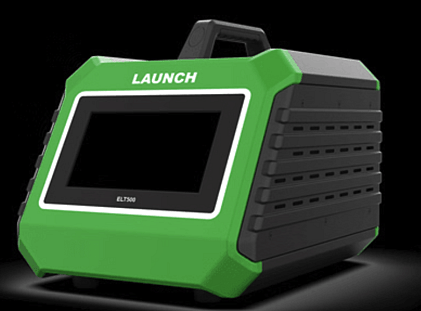
The tightness test and the camera are two halves of one job, so we pair them. The LAUNCH ELT500 EV Battery Pack Air Tightness Tester runs the test. You preset the pressure, the time for each stage and the leak limit, and it reads the pressure to 1 Pa across a 0 to 30 kPa range, draws the pressure curve live and alarms when a pack fails.
That resolution matters at pack pressures. Tesla’s Model 3 and Model Y procedures run at 0.15 psi, which is only about 1 kPa, well inside the ELT500’s range. The ELT500 tells you the pack has failed, and the TD2e shows you where.
WHAT IT MEANS FOR YOUR WORKSHOP
If you’re opening HV packs, and only HV-trained technicians should be, whether for module replacement, contacter work or a coolant leak, you own the reseal. When it comes back wet, it comes back to you.
• Find it in minutes, not an afternoon. Workshop time is the one thing you can’t bill twice.
• Fix the right joint first time, instead of pulling the lid again on a guess.
• Hand the customer proof. A picture of the leak on the job card is harder to argue with than a line of text on the invoice.
• It earns its keep well beyond EVs. The TD2e is built for compressed air, gas, refrigerant and vacuum leaks, pneumatic fittings and NVH work: belt squeal, bearing noise and exhaust leaks. That covers truck and trailer air systems, and the leaks in your own compressed air lines.
TALK TO US
We know how to use what we sell. For more on the FOTRIC acoustic imaging camera range, and which camera suits the work you do, give us a call.